통합 검색
통합 검색
Information to the Greater Middle East
Morocco, Algeria, Tunisia, Libya, Egypt, Sudan
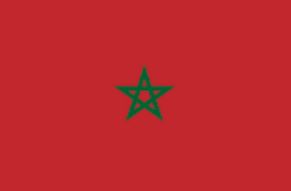

The official name of the country is the Republic of Tunisia. It is located in North Africa, bordered by Algeria to the west and Libya to the southeast. The Mediterranean Sea lies to its north and east. Tunisia was the birthplace of the Arab Spring in 2011, leading to democratic transitions and political reforms. The country faces economic challenges, including high unemployment, but is working towards further democratic consolidation and economic growth. Tunisia is known for its ancient Roman ruins and beautiful Mediterranean coastline. The country is administratively divided into 24 governorates.
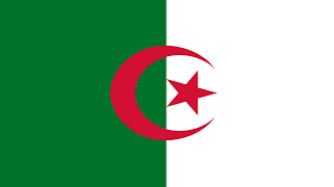
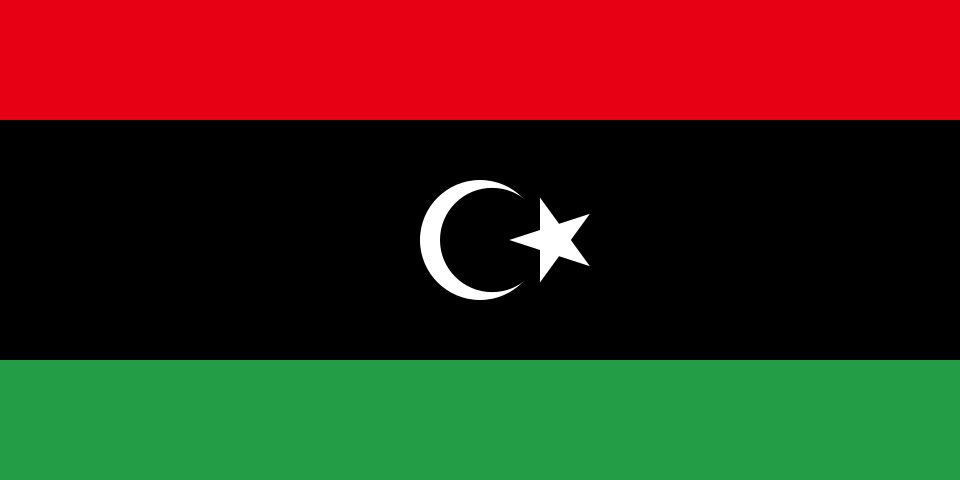

The official name of the country is the Arab Republic of Egypt. Located in Northeast Africa, it is bordered by the Gaza Strip and Israel to the northeast, Sudan to the south, Libya to the west, and the Mediterranean Sea to the north and the Red Sea to the east. Egypt is a transcontinental country, with its Sinai Peninsula forming a land bridge in Asia. The country is known for its ancient civilization, including iconic structures like the Pyramids of Giza and the Sphinx. Politically, Egypt has experienced significant shifts, including the 2011 revolution that overthrew President Hosni Mubarak and subsequent periods of political instability. The Suez Canal, a vital waterway connecting the Mediterranean Sea and the Red Sea, is a crucial component of global trade. The country is administratively divided into 27 governorates.
Lebanon, Syria, Jordan, lsrael, Palestine
The official name of the country is the Lebanese Republic. It borders Syria to the north and east, Israel to the south, and the Mediterranean Sea to the west. In 1958, constitutional amendments triggered by President Chamoun’s pro-Western stance led to a prolonged civil war (1975–1990) between government forces and insurgents, destabilizing the country. Additionally, Lebanon suffered extensive damage due to over 30 years of armed conflict between Palestinian and Islamic guerrillas and Israel, which further devastated the nation. In 2006, Hezbollah, a Palestinian militant group based in southern Lebanon, kidnapped two Israeli soldiers, prompting Israel to bomb major Lebanese cities in retaliation, which left the country’s political situation unresolved. UN Resolution 1701, passed in August 2006, called for the disarmament of Hezbollah. The country’s administrative divisions consist of 8 governorates (mohafazah).
- Area: 10,452 km² - GDP per capita: $11,793 |
- Capital: Beirut - Total Population: 5,366,699 (Ranked 120th in the world as of March 15, 2023) - Official Languages: Arabic, French, English, Armenian - Official Scripts: Arabic script, Latin script |

The official name of the country is the Hashemite Kingdom of Jordan. It is located in Western Asia, bordered by Syria to the north, Iraq to the northeast, Saudi Arabia to the east and south, and Israel and the West Bank to the west. Jordan is a stable constitutional monarchy. The country plays a significant role in regional diplomacy and hosts a substantial number of refugees from neighboring conflicts. Its economy relies heavily on services, tourism, and foreign aid. Jordan is home to the ancient city of Petra, a UNESCO World Heritage Site. The country is administratively divided into 12 governorates.
The official name of the country is the State of Israel.
It borders Lebanon to the north, Syria to the east, and Egypt to the southwest.
Situated between the Arab world and the Palestinian territories, Israel is the world’s only Jewish-majority republic and the only parliamentary democracy in the Middle East.
The name “Israel” comes from the Hebrew word meaning “God prevails”, originating from the biblical story of Jacob, the second son of Isaac (Genesis 32:28).
Administratively, the country is divided into six districts (mehozot).

The self-claimed name of the entity is the State of Palestine. It is a de jure
sovereign state in the Middle East recognized by 151 UN member states.
It is composed of the West Bank and the Gaza Strip, though both territories have been under Israeli occupation since 1967. The status of Palestine remains a
central issue in the Israeli-Palestinian conflict. The Palestinian Authority
governs parts of the West Bank, while Hamas governs the Gaza Strip. The region faces significant political, economic, and humanitarian challenges due to the ongoing conflict and occupation.
Saudi Arabia, Kuwait, Bahrain, Qatar, The United Arab Emirates, Oman, Yemen
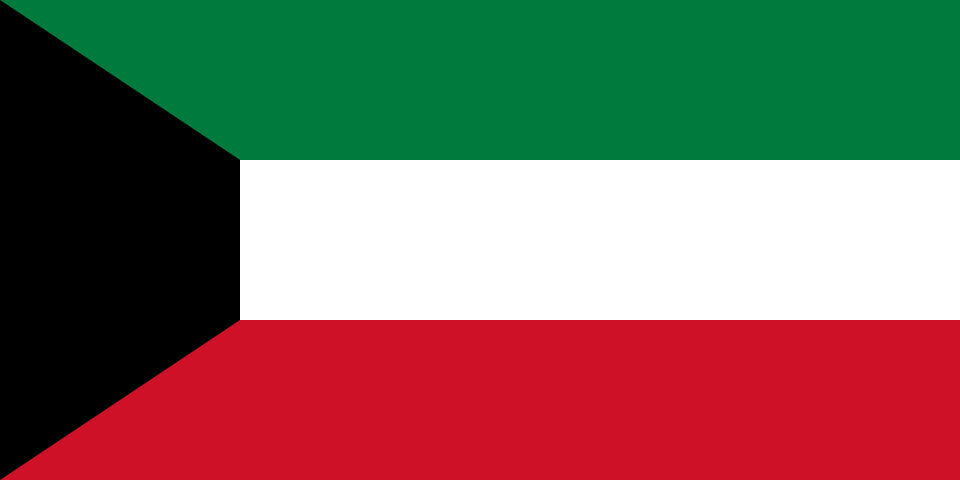
The official name of the country is the State of Kuwait. It is located at the northeastern edge of the Arabian Peninsula in Western Asia, bordered by Iraq to the north and Saudi Arabia to the south. The Persian Gulf lies to its east. Kuwait is a small, oil-rich country with one of the world's largest oil reserves. It has a parliamentary system with a hereditary emir. The country faces environmental challenges related to its desert climate and oil production. Kuwait is administratively divided into 6 governorates.
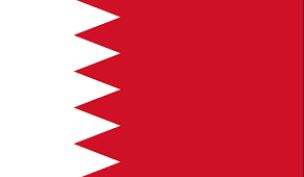

The official name of the country is the State of Qatar. It is a peninsula nation in the Persian Gulf, bordered by Saudi Arabia to the south and surrounded by the Persian Gulf on its other three sides. Qatar is one of the world's wealthiest countries per capita, largely due to its vast natural gas and oil reserves. It has invested heavily in infrastructure and international ventures, including hosting the 2022 FIFA World Cup. Qatar is an absolute monarchy. The country is administratively divided into 8 municipalities.
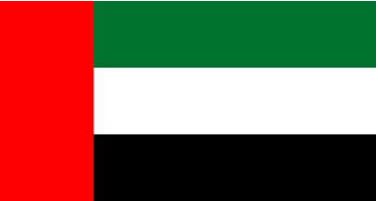

The official name of the country is the Sultanate of Oman. It is located on the southeastern coast of the Arabian Peninsula, bordered by the United Arab Emirates to the northwest, Saudi Arabia to the west, and Yemen to the southwest. Its coastline includes the Arabian Sea on the southeast and the Gulf of Oman on the northeast. Oman is an absolute monarchy. The country has a relatively stable political environment and is known for its natural beauty and efforts to preserve its cultural heritage. Its economy is largely based on oil and gas, but the government is pursuing diversification strategies. The country is administratively divided into 11 governorates.

The official name of the country is the Republic of Yemen. It is located in Western Asia, at the southern end of the Arabian Peninsula, bordered by Saudi Arabia to the north, Oman to the northeast, and the Arabian Sea and Gulf of Aden to the south, and the Red Sea to the west. Yemen has been in a state of civil war since 2014, leading to a severe humanitarian crisis. The conflict has caused widespread famine, displacement, and a collapse of essential services. Despite its strategic location, political instability has hindered economic development. The country is administratively divided into 22 governorates.
Turkey, Iran
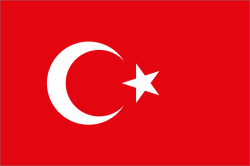
The official name of the country is the Republic of Turkey (Republic of Türkiye). It borders Iran, Armenia, and Georgia to the east; Iraq and Syria to the south; and Bulgaria and Greece to the northwest. It is surrounded by seas on three sides—the Black Sea to the north, the Mediterranean Sea to the south, and the Aegean Sea to the west. The Anatolian Peninsula (Asia Minor) forms the majority of the country’s landmass, situated between the Black Sea and the Mediterranean Sea, serving historically as a bridge between Europe and Asia, often referred to as Asia Minor or Eastern Thrace in the European part.
Due to this strategic geographical position, Turkey has long served as a crossroads of civilizations, where Eastern and Western cultures meet, resulting in deep historical significance and cultural blending. The Ottoman Empire, a successor to the Seljuk state, ruled much of the region from the late 13th century until the early 20th century. After the fall of the Ottoman Empire in the early 1900s, the Republic of Turkey was founded in 1923.
In the Aegean region, there have been territorial disputes with Greece over islands, maritime boundaries, and airspace. Within eastern Turkey, the Kurdish population, who have long demanded autonomy or independence, have engaged in armed conflict with the Turkish government since 1984, and their independence movement continues today.
Turkey is administratively divided into 81 provinces (il).
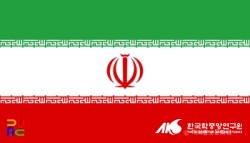
The official name of the country is the Islamic Republic of Iran (Jomhuri-ye Eslami-ye Iran).
It was formerly known as Persia, but in 1935 the name was changed to “Iran,” meaning the land of the Aryans.
Iran is bordered by Afghanistan and Pakistan to the east, Azerbaijan and Armenia to the northwest, and Turkey and Iraq to the west.
To the south lies the Persian Gulf and the Gulf of Oman, and to the north the Caspian Sea.
A multiethnic nation, Iran has historically served as a bridge between the Middle East and Central Asia.
During the 1970s, the Pahlavi monarchy sought to expand regional influence through nuclear development programs, and since the 1990s, the resumption of its nuclear program has caused continued conflict with the United States, Israel, and the international community.
Administratively, Iran is divided into 30 provinces (ostan).
Afghanistan, Pakistan, sometimes the Caucasus states (Azerbaijan, Armenia, and Georgia), Turkmenistan, Uzbekistan
The official name of the country is the Republic of Afghanistan.
It is located in the southwestern part of the Pamir Plateau, with most of its territory lying at an elevation of over 1,000 meters.
Afghanistan borders Pakistan to the east and south, Iran to the west, Uzbekistan, Turkmenistan, and Tajikistan to the north, and China’s Xinjiang Uyghur Autonomous Region to the northeast.
Following the September 11, 2001 terrorist attacks in the United States, Afghanistan was invaded by the United States, the United Kingdom, and allied anti-Taliban forces after it refused to hand over Osama bin Laden, the leader of al-Qaeda.
Administratively, the country is divided into 34 provinces (velayat).
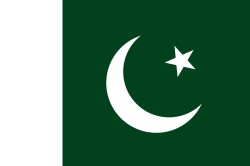
The official name of the country is the Islamic Republic of Pakistan. It is located in the northwestern part of India and has a coastline of 1,046 km. The total area is 796,095 km², and the population is 199,085,847 (as of 2015).The capital city is Islamabad. The ethnic composition consists of Punjabis (66%), Sindhis (13%), among others. The languages include Urdu as the official language, while English is also widely used. In addition, Punjabi, Sindhi, and Pashto are commonly spoken.
The religion is predominantly Islam (95%), which is the state religion, followed by Christianity (3%) and Hinduism (1%). Pakistan is an agricultural country, primarily producing rice, wheat, and cotton.
Since independence, it has focused on industrialization, achieving significant growth in light industries such as textiles, fertilizers, cement, and food processing. However, the majority of the population is still engaged in agriculture. As of 2015, the Gross National Product (GNP) was 288 billion USD, with a per capita income of 1,513 USD. The political system is a republic, combining elements of both a presidential and a parliamentary system.
The Parliament is bicameral, consisting of an upper house (Senate) with 100 seats and a term of six years, and a lower house (National Assembly) with 342 seats and a term of five years.
Major political parties include the Pakistan People's Party (PPP), the Pakistan Muslim League – Nawaz (PML-N), and the Mohajir Qaumi Movement (MQM).
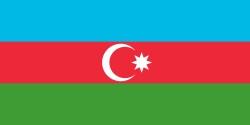
The official name of the country is the Republic of Azerbaijan. It has a coastline of 800 km, and is located between southern Russia and Iran. Azerbaijan is one of the republics that make up the Commonwealth of Independent States (CIS). The total area is 86,600 km², and the population is 9,780,780 (as of 2015). The capital is Baku. The population consists of Azerbaijanis (90.6%), Dagestanis (2.2%), Russians (1.8%), and Armenians (1.5%), among others. The official language is Azerbaijani, and the religious composition is Islam 93.4%, Russian Orthodox 2.5%, and Armenian Apostolic 2.3%. The Kura River and Aras River basins consist mainly of steppe regions that were once barren, but today have become cultivable through irrigation development. The Caspian coastal cities are bustling with oil tankers transporting crude oil from the Baku oil fields. As of 2015, the Gross National Product (GNP) was 50.7 billion USD, and the per capita income was 6,794 USD. Azerbaijan is a presidential republic with a five-year term for the president. Its unicameral parliament consists of 125 seats with a five-year term.
Major political parties include the New Azerbaijan Party, the Musavat Party, the Civil Solidarity Party, and the Homeland Party.
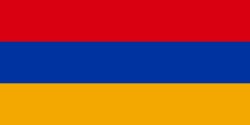
The official name of the country is the Republic of Armenia. It is located in the eastern part of Turkey in Southwest Asia (at approximately 40°N, 45°E), bordered by Georgia to the north, Azerbaijan to the east, Iran to the south, and Turkey to the west. Armenia declared its independence from the Soviet Union on September 21, 1991. The name Armenia originates from Armenak, the grandson of the legendary leader Haik, and from the ancient and powerful tribe known as the Armens. The total area of the country is 29,800 km², equivalent to 13.5% of the Korean Peninsula. It extends 360 km from north to south and 200 km from east to west, with about 90% of its territory consisting of mountainous terrain over 1,000 meters above sea level. As of 2010, the total population was 3.26 million, and the capital city is Yerevan, with a population of 1.12 million. Administratively, Armenia is divided into one city (Yerevan) and ten provinces. The country has a subtropical climate, with an average temperature of –2.3°C in January and 16.3°C in June (based on 2010 data). The ethnic composition consists mainly of Armenians (97.9%), with minorities such as Kurds (1.3%), Russians (0.5%), and others (0.3%), including Azerbaijanis, Greeks, and Ukrainians. The official language is Armenian, while Russian is also widely spoken.
The religious composition is Armenian Apostolic Church 94.7%, Christianity 4%, and Others 1.3%. Armenia is a presidential republic with a five-year presidential term, and the president can serve consecutive terms. Following the February 2008 presidential election, Serzh Sargsyan was elected president, with the next election scheduled for February 2013. The National Assembly is unicameral, consisting of 131 seats with a five-year term. The parliamentary election was last held on May 6, 2012. As of 2010, Armenia’s Gross Domestic Product (GDP) was 9.37 billion USD, with a per capita GDP of 2,878 USD. The total trade volume was 4.79 billion USD, including exports worth 1.04 billion USD and imports worth 3.75 billion USD. The economic growth rate was 2.6%, and the inflation rate was 8.2%. As of November 2011, the country’s foreign exchange reserves amounted to 1.9 billion USD.
The currency is the Armenian Dram (AMD), and as of November 2011, the exchange rate was 1 USD = 382 AMD.
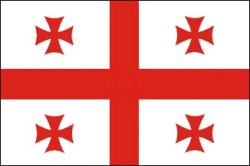
The country is located on the Black Sea coast in southern Russia, with a coastline of 310 km. It was one of the republics that formed the Commonwealth of Independent States (CIS), but in June 2009, the parliament voted to withdraw, drawing significant international attention. The total area is 69,700 km², and the population is 4,931,226 (as of 2015). The capital city is Tbilisi. The population composition includes Georgians (83.8%), Azerbaijanis (6.5%), Armenians (5.7%), and Russians (1.5%). The official language is Georgian, and the religious composition is Georgian Orthodox (83.9%), Islam (9.9%), and Armenian Apostolic (3.9%), among others. About two-thirds of the national territory is mountainous, while the plains are well suited for livestock farming and viticulture (grape cultivation). The country receives abundant rainfall and experiences significant temperature variations. It is rich in natural resources such as coal, iron ore, and petroleum, which has supported the development of heavy industries and power generation facilities. As of 2015, the Gross National Product (GNP) was 14 billion USD, and the per capita income was 3,720 USD. Georgia is a presidential republic, with a unicameral parliament consisting of 150 seats and a four-year term. Major political parties include the United National Movement, the Georgian Dream – Democratic Georgia, the Christian Democratic Movement, the Republican Party, and the Labor Party.
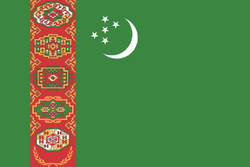
The country is located between Uzbekistan and Iran in Central Asia, with a coastline of 1,768 km. It is one of the republics that make up the Commonwealth of Independent States (CIS). The total area is 488,100 km², and the population is 5,231,422 (as of 2015). The capital is Ashgabat (also spelled Ashkhabad). The ethnic composition consists of Turkmen (85%), Uzbeks (5%), Russians (4%), and Kazakhs (2%). The official language is Turkmen, and the religious composition is Islam (89%) and Eastern Orthodox Christianity (9%). The climate is desert-type, characterized by hot summers and mild winters, rarely dropping below freezing. Rainfall is concentrated in spring but quickly evaporates due to high temperatures. About 80% of the territory consists of arid lowlands and desert regions.
Major products include cotton and wool, and the country is also rich in petroleum and natural gas resources. As of 2015, the Gross National Product (GNP) was 47.9 billion USD, and the per capita income was 9,031 USD. Turkmenistan is a presidential republic, and its parliament is unicameral with 50 seats serving a five-year term. The major political party is the Democratic Party.
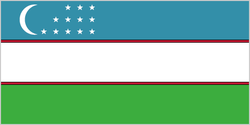
The official name of the country is the Republic of Uzbekistan, one of the republics that make up the Commonwealth of Independent States (CIS). The area is 447,400 km², and the population is 29,199,942 (as of 2015). The capital city is Tashkent. The ethnic composition consists of Uzbeks (80%), Russians (5.5%), Tatars (1.5%), Kazakhs (3%), Tajiks (5%), Karakalpaks (2.5%), and Koreans (1%), among others.
The official language is Uzbek, and the religious composition is Sunni Islam (88%), Russian Orthodox (9%), and Others (3%). The climate is continental and dry, though winters in the plains rarely drop below freezing, while summers are hot and long. The main industries include cotton production, which is highly developed, and natural gas, which is produced in large quantities. Industry has grown rapidly based on abundant gas, oil, and electric resources, and Uzbekistan operates the largest steel plant in Central Asia. In the light industry sector, textiles and food processing are the most developed. However, the country's fertile soil, once known for its richness, has suffered serious land degradation due to artificial irrigation and excessive fertilizer use. As of 2015, the Gross National Product (GNP) was 62.6 billion USD, and the per capita income was 2,090 USD. Uzbekistan is a presidential republic, with a seven-year presidential term. Its parliament is bicameral, consisting of a Senate (100 seats) and a Legislative Chamber (120 seats), both serving five-year terms. Major political parties include the Liberal Democratic Party (39 seats), the People’s Democratic Party (27 seats), the National Revival Democratic Party (18 seats), the Reconstruction Democratic Party (11 seats), and the Justice Social Democratic Party (10 seats), as well as the Freedom Party and the Unity Party.
